Grounded Openness
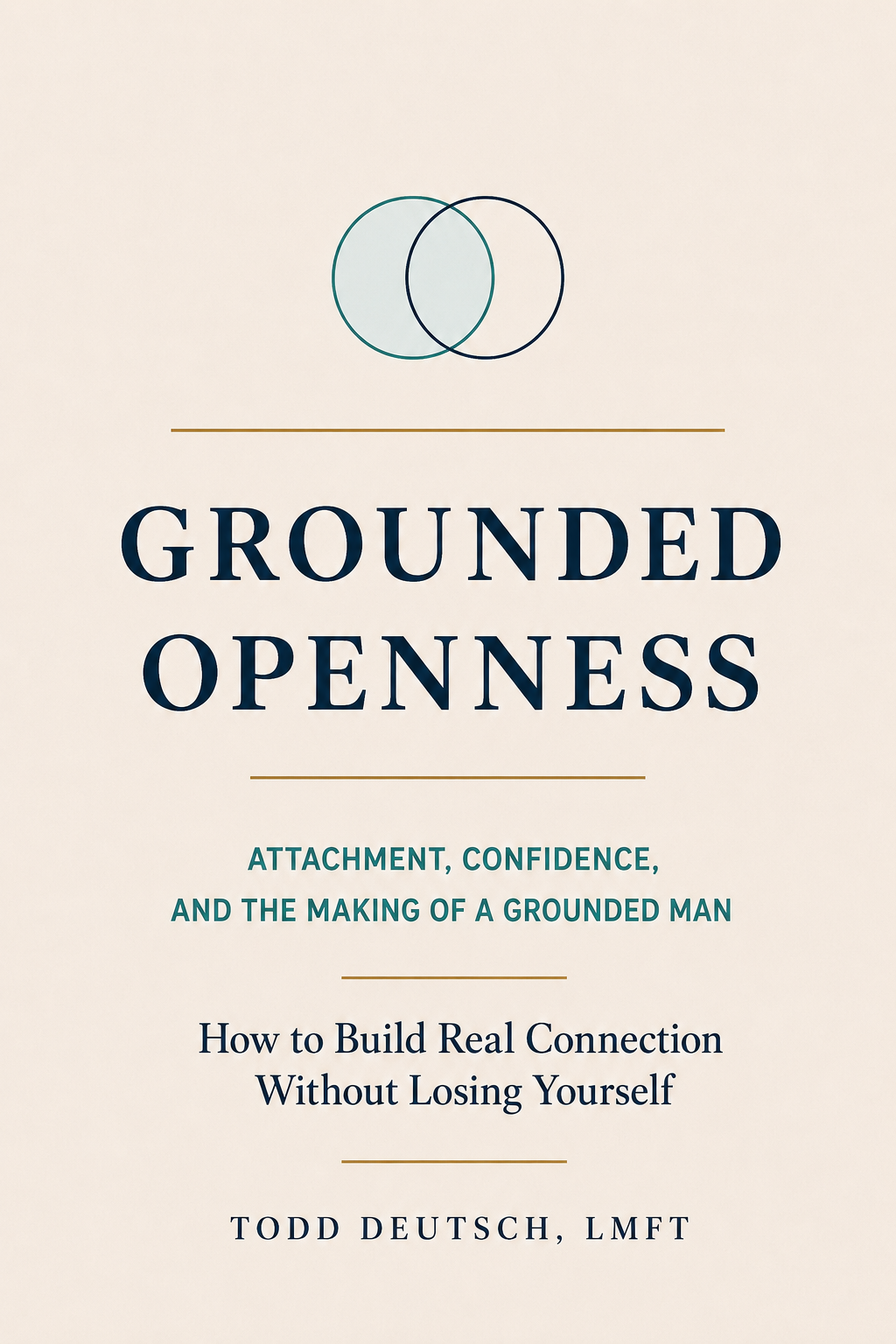
Attachment, Attraction, and Staying Yourself in Modern Relationships
By Todd Deutsch, LMFT
Modern relationships ask us to do something surprisingly difficult: remain emotionally open without losing ourselves.
Grounded Openness explores attachment styles, emotional regulation, dating, intimacy, vulnerability, attraction, and the patterns that influence how we pursue connection, protect ourselves, pull away, and return.
Drawing from more than two decades of clinical experience working with individuals, men, and couples, Todd Deutsch, LMFT explores what happens beneath the surface of relationships and how greater self-awareness can lead to healthier, more secure connection.
Understanding the Patterns Beneath Relationships
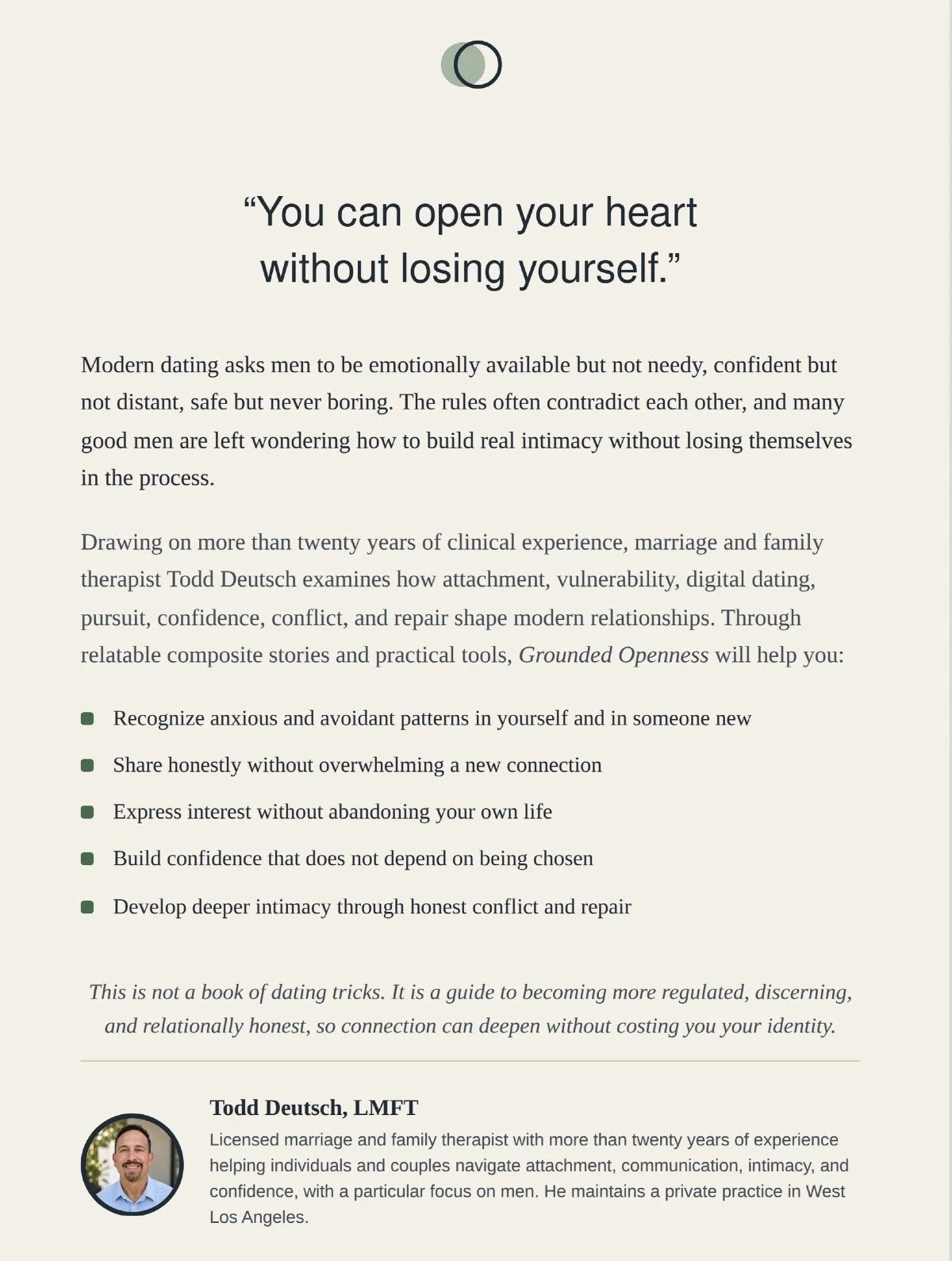
Grounded Openness examines the psychological and emotional patterns that shape dating, intimacy, attraction, and long-term relationships.
The book explores:
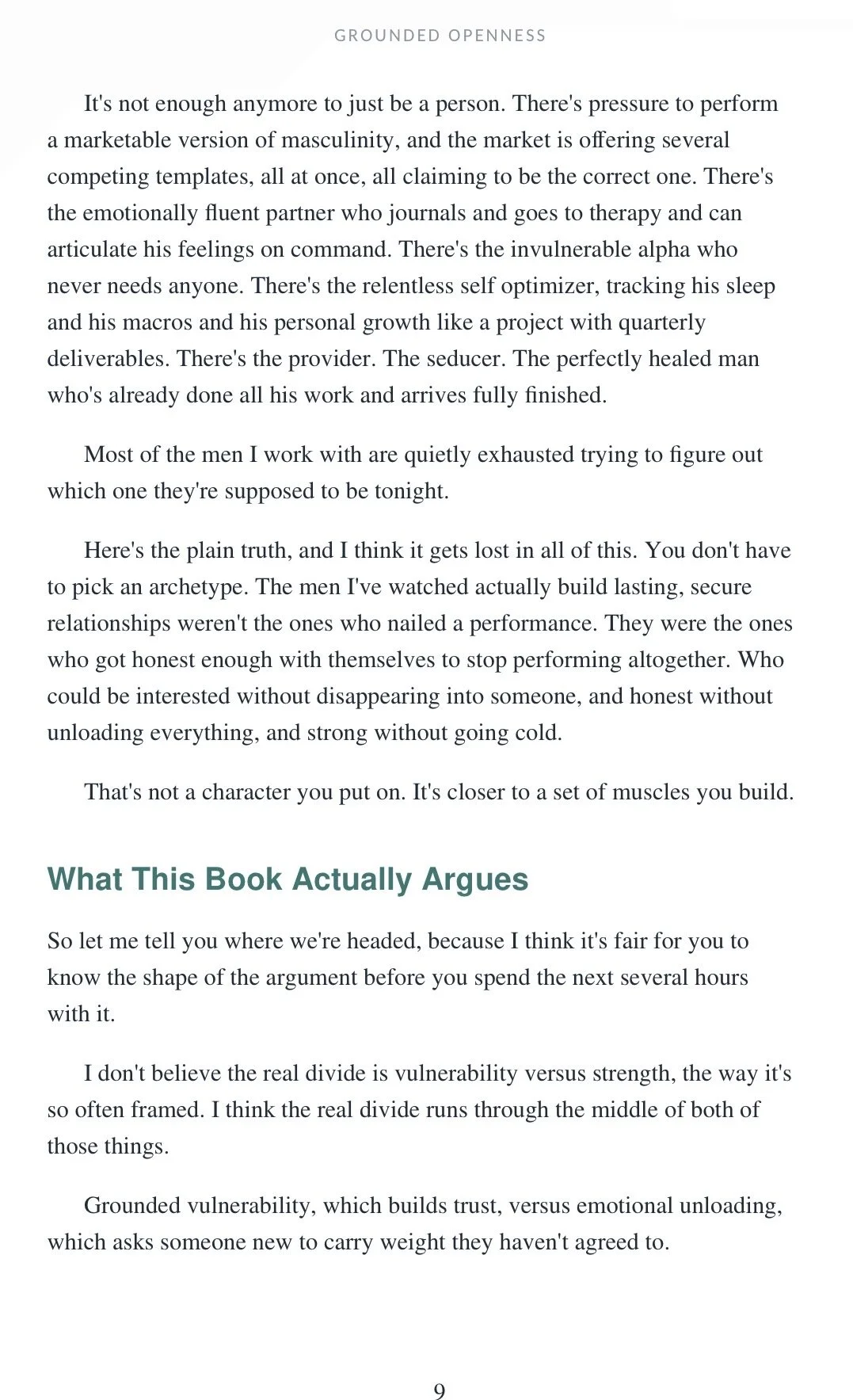
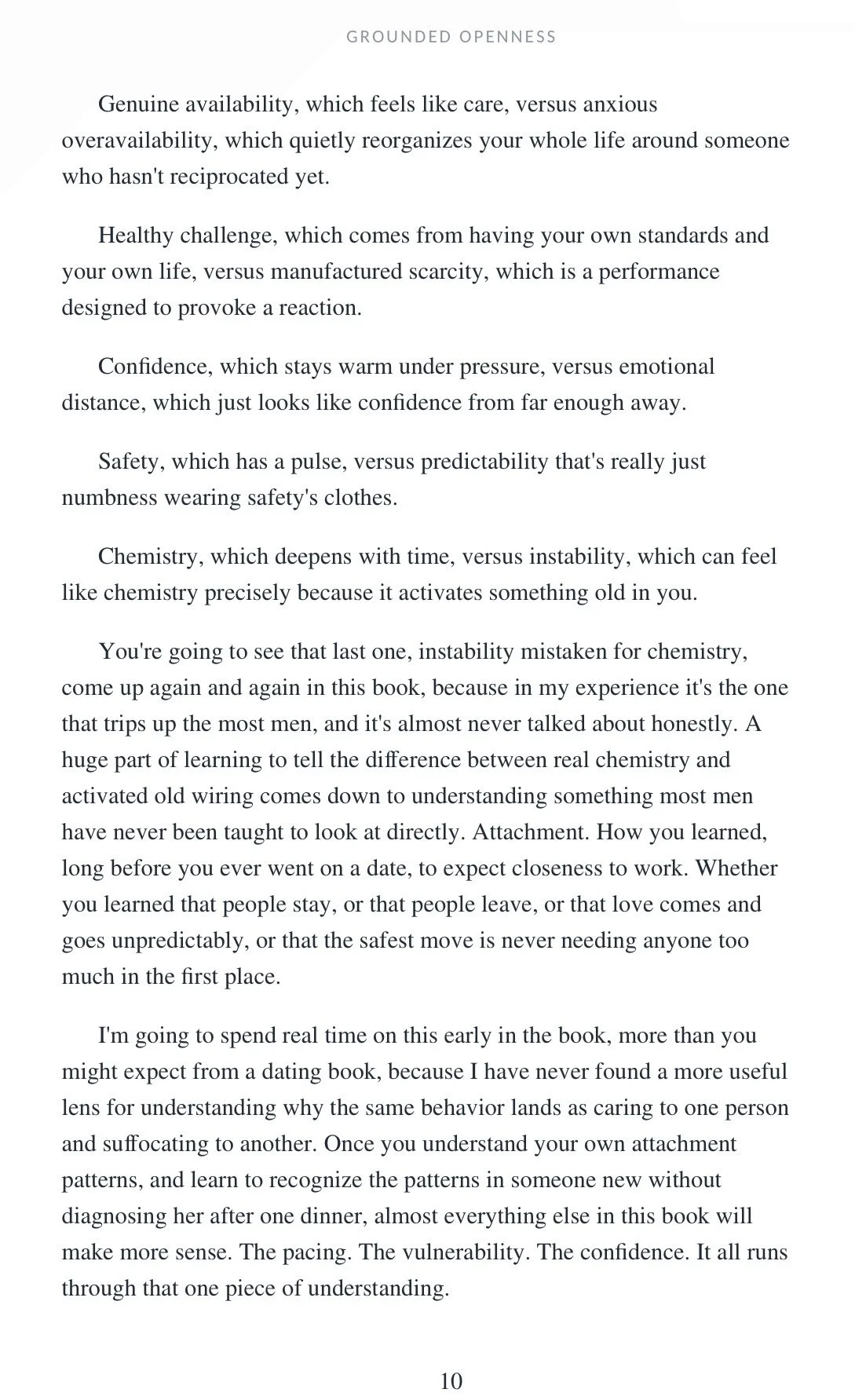
Secure, anxious, avoidant, and fearful avoidant attachment styles
The anxious avoidant relationship cycle
Why some people pursue while others withdraw
Emotional availability and vulnerability
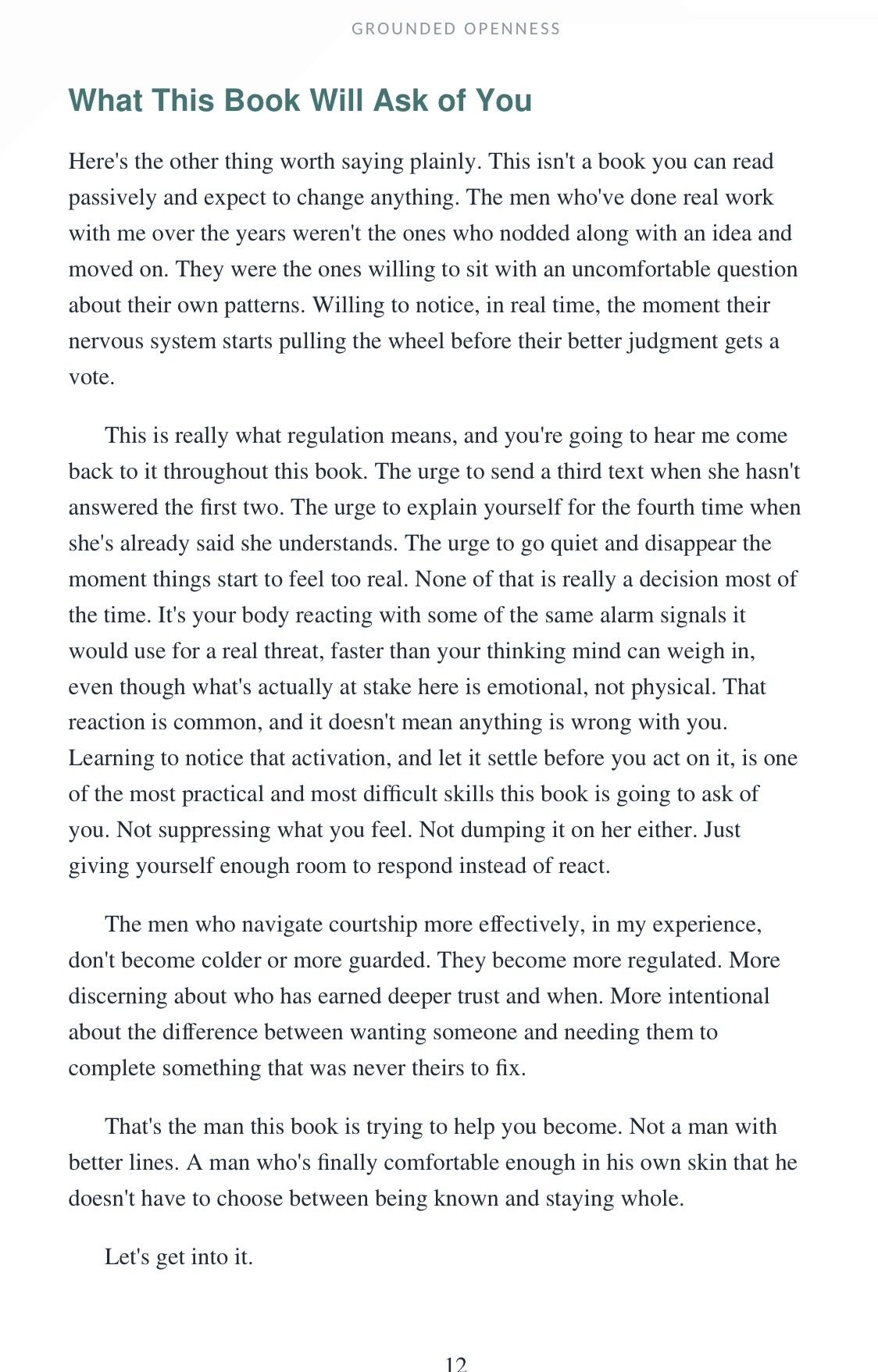
Nervous system regulation in relationships
Dating, texting, pacing, and uncertainty
Attraction versus emotional safety
Fear of rejection and fear of intimacy
Love addiction and emotional dependency
Communication and relationship conflict
Maintaining identity within intimate relationships
Developing earned security
Confidence, courage, and emotional regulation
How old wounds influence present relationships
Rather than using attachment styles as permanent labels, Grounded Openness encourages readers to become curious about their patterns, understand what activates them, and develop healthier ways of responding.
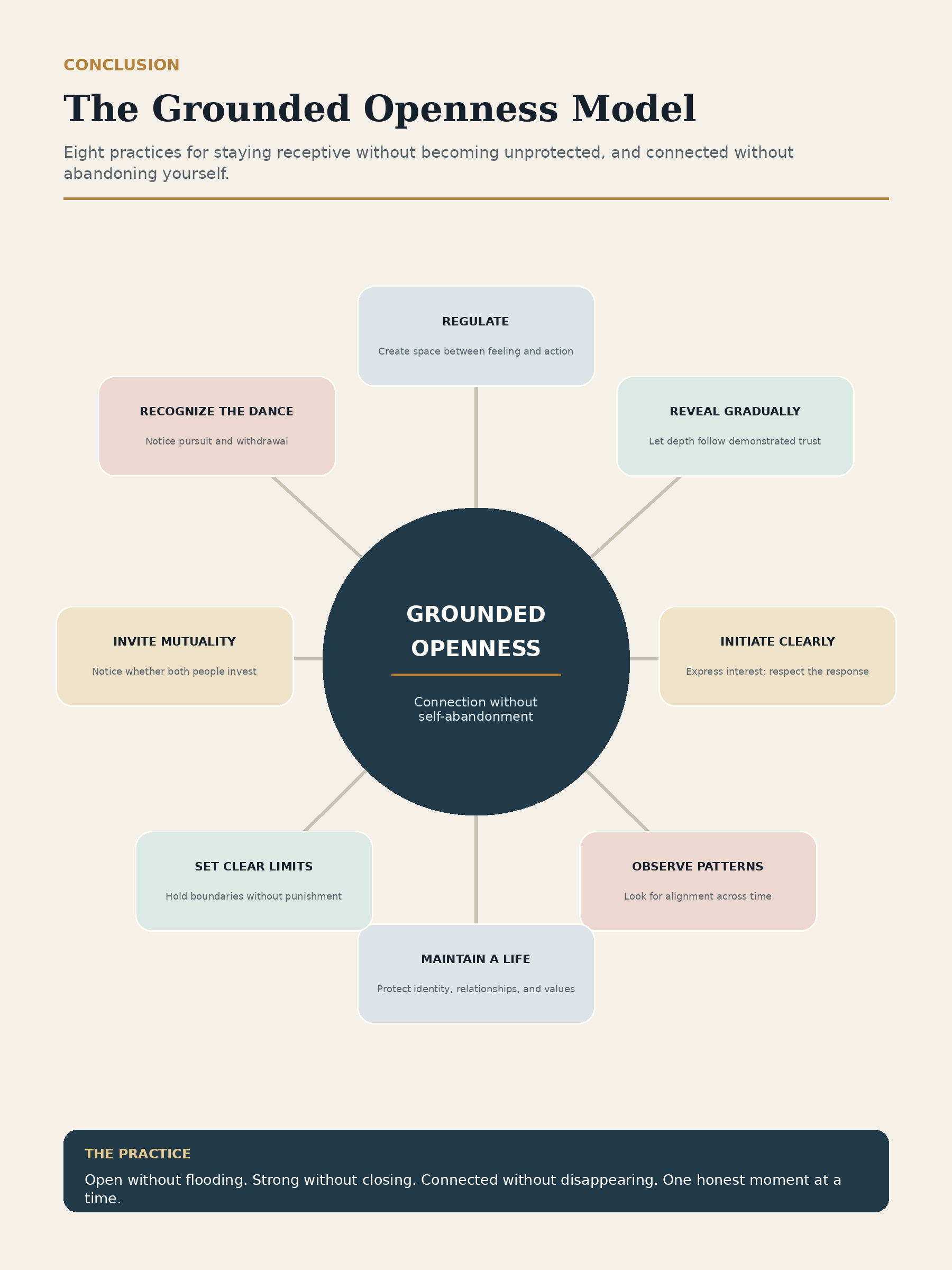
What Does It Mean to Be Grounded and Open?
Being open means allowing yourself to experience intimacy, uncertainty, affection, vulnerability, desire, and emotional connection.
Being grounded means maintaining your identity, values, emotional regulation, boundaries, and sense of self while doing so.
Healthy relationships require both.
Without openness, we protect ourselves from the very connection we want.
Without grounding, we can lose ourselves trying to secure that connection.
Grounded openness is the ability to stay emotionally available without abandoning yourself.
The Attachment Map
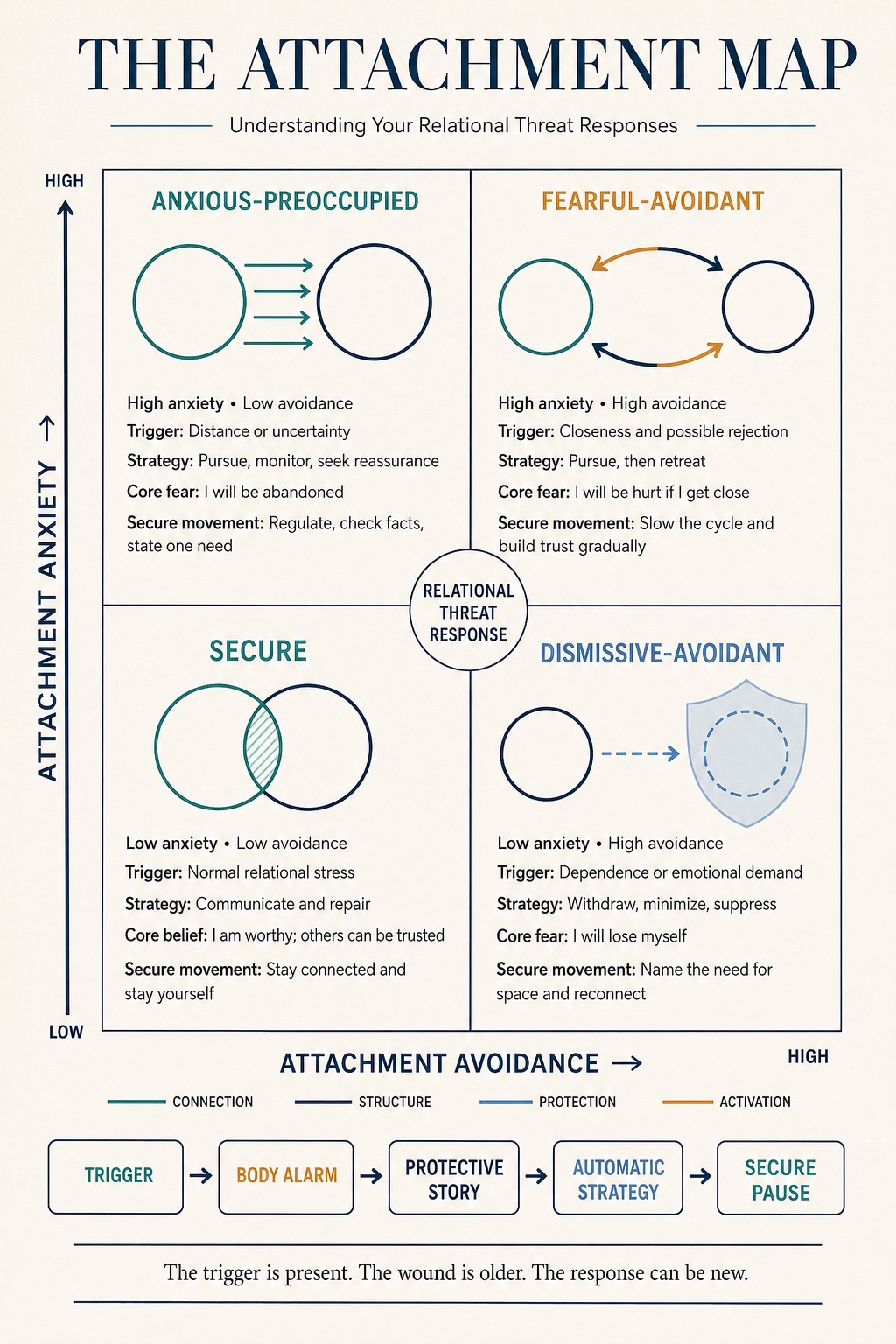
The 4 Attachment Styles
Secure
Anxious
Avoidant
Fearful Avoidant
Secure Attachment
Comfortable with closeness, trust, communication, and independence. Securely attached people can connect deeply while maintaining a strong sense of self.
Anxious Attachment
Often highly sensitive to changes in closeness or connection. Anxiously attached people may seek reassurance, fear rejection, or become preoccupied when a relationship feels uncertain.
Avoidant Attachment
Often values independence and may create emotional distance when closeness feels overwhelming. Avoidantly attached people may minimize needs, withdraw, or struggle with vulnerability.
Fearful Avoidant Attachment
Often experiences both a strong desire for connection and a fear of getting hurt. This can create a push-pull pattern of seeking intimacy and then retreating when closeness feels unsafe.
Attachment styles are not fixed labels. With awareness, emotional regulation, healthier relationships, and intentional work, people can develop greater security over time.
Relationships Make More Sense When We Understand What Is Happening Beneath Them
Over more than twenty years of working with individuals, men, and couples, I have repeatedly seen people struggle with similar questions:
Why do I become anxious when someone pulls away?
Why do I lose interest when someone gets too close?
Why do I keep choosing the same type of relationship?
Why can I understand my pattern intellectually but still repeat it emotionally?
Grounded Openness grew from these questions and from years of helping people understand the connection between attachment, emotional regulation, confidence, communication, intimacy, and self-worth.
The stories appearing in the book are composites created to illustrate common psychological and relationship patterns while protecting client confidentiality.
About Author Todd Deutsch, LMFT
Todd Deutsch is a Licensed Marriage and Family Therapist, psychotherapist, couples counselor, and coach in Los Angeles with more than twenty years of experience helping adults, men, couples, athletes, and professionals navigate relationships, anxiety, self-esteem, emotional regulation, life transitions, and personal growth.
His therapeutic approach integrates attachment-based therapy, psychodynamic therapy, cognitive behavioral therapy, mindfulness, narrative therapy, and practical strategies for developing greater self-awareness and healthier relationships.
Todd is the founder of Complete Game Plan and provides individual psychotherapy, couples counseling, men's therapy, men's groups, coaching, and sports performance counseling in West Los Angeles and through online sessions.
Read Grounded Openness
Understanding your attachment patterns does not mean placing yourself inside a psychological category.
It means becoming more aware of what happens inside you when connection, attraction, intimacy, uncertainty, and vulnerability enter the picture.
Awareness creates choice.
And choice makes a different kind of relationship possible.
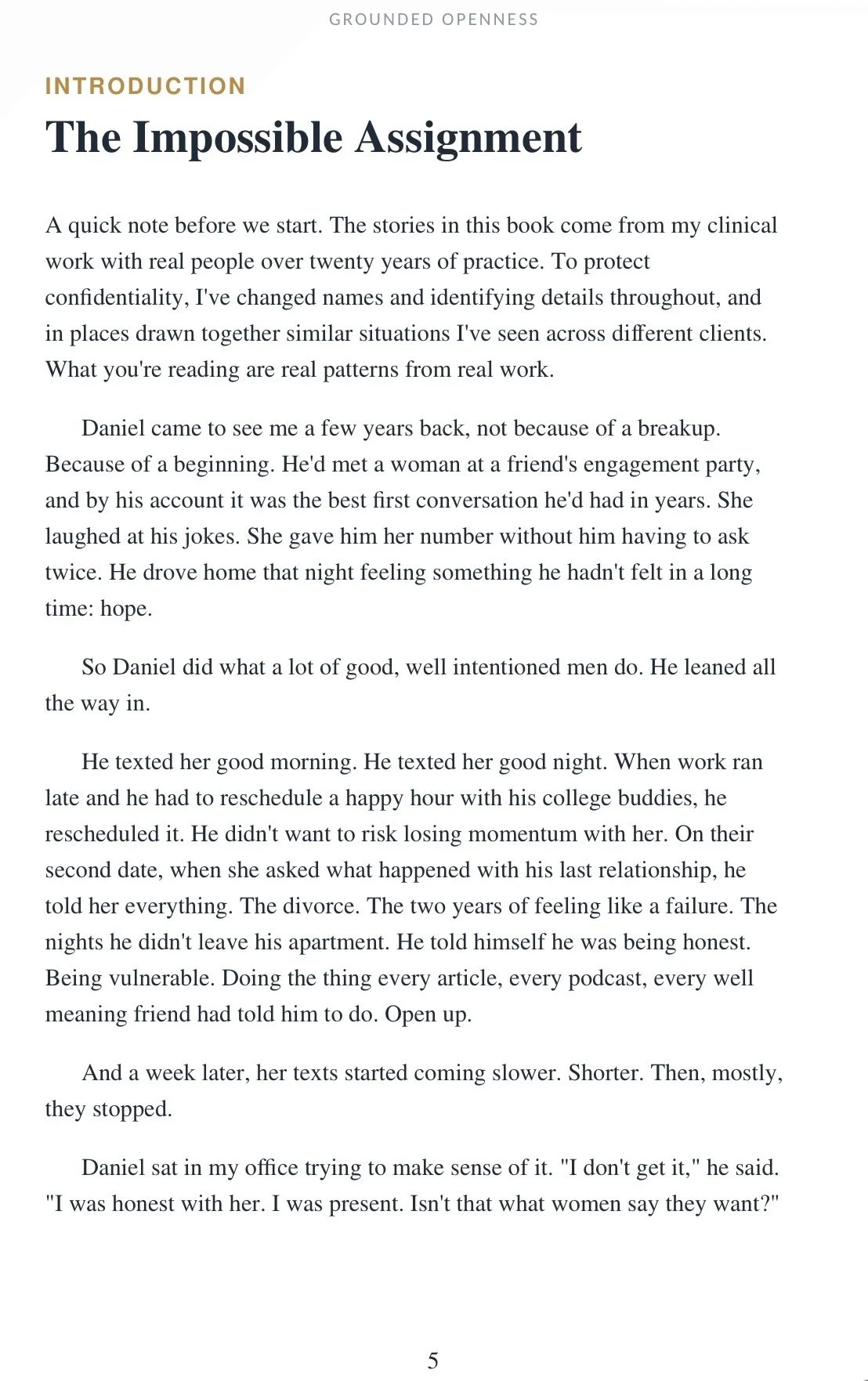
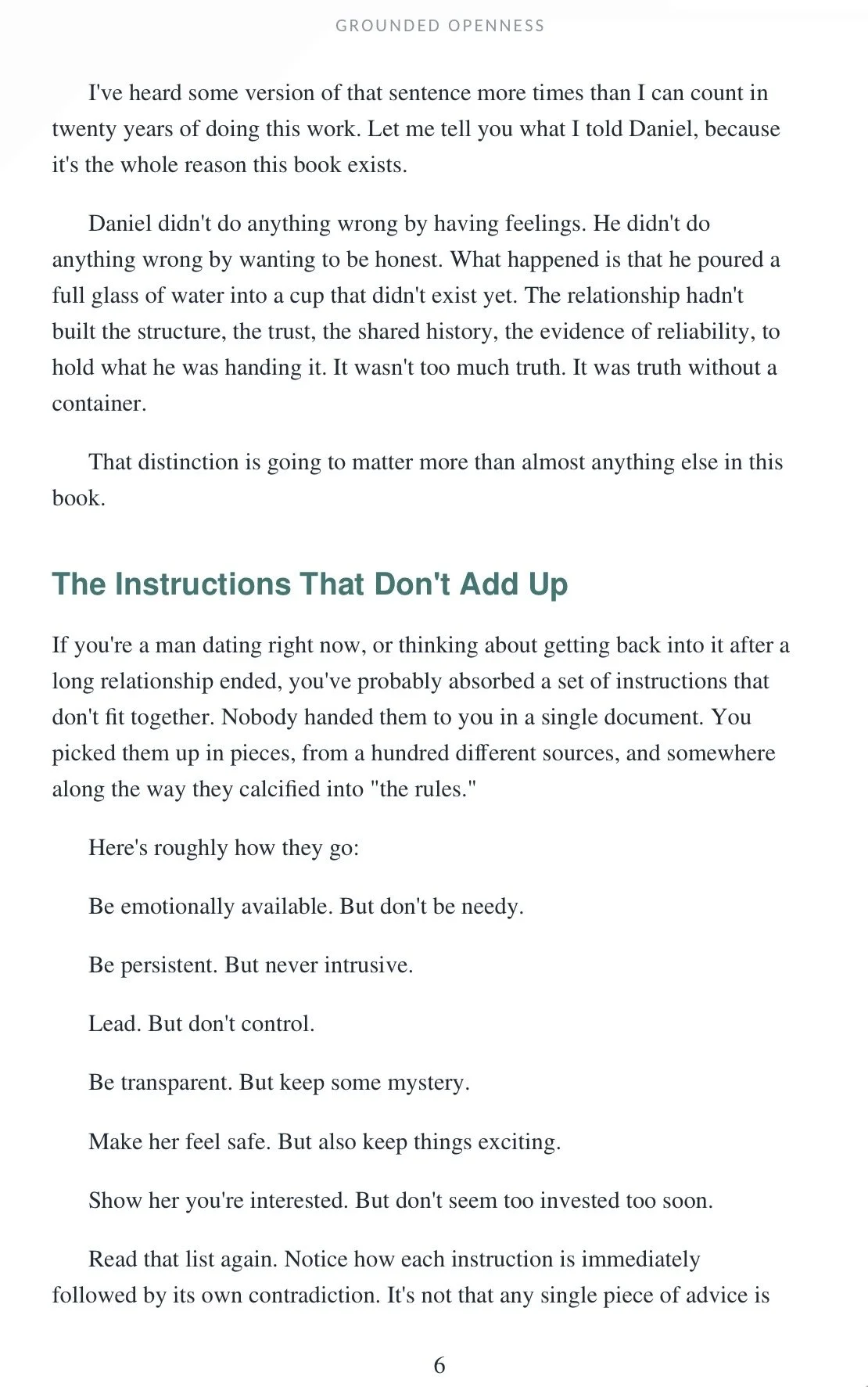
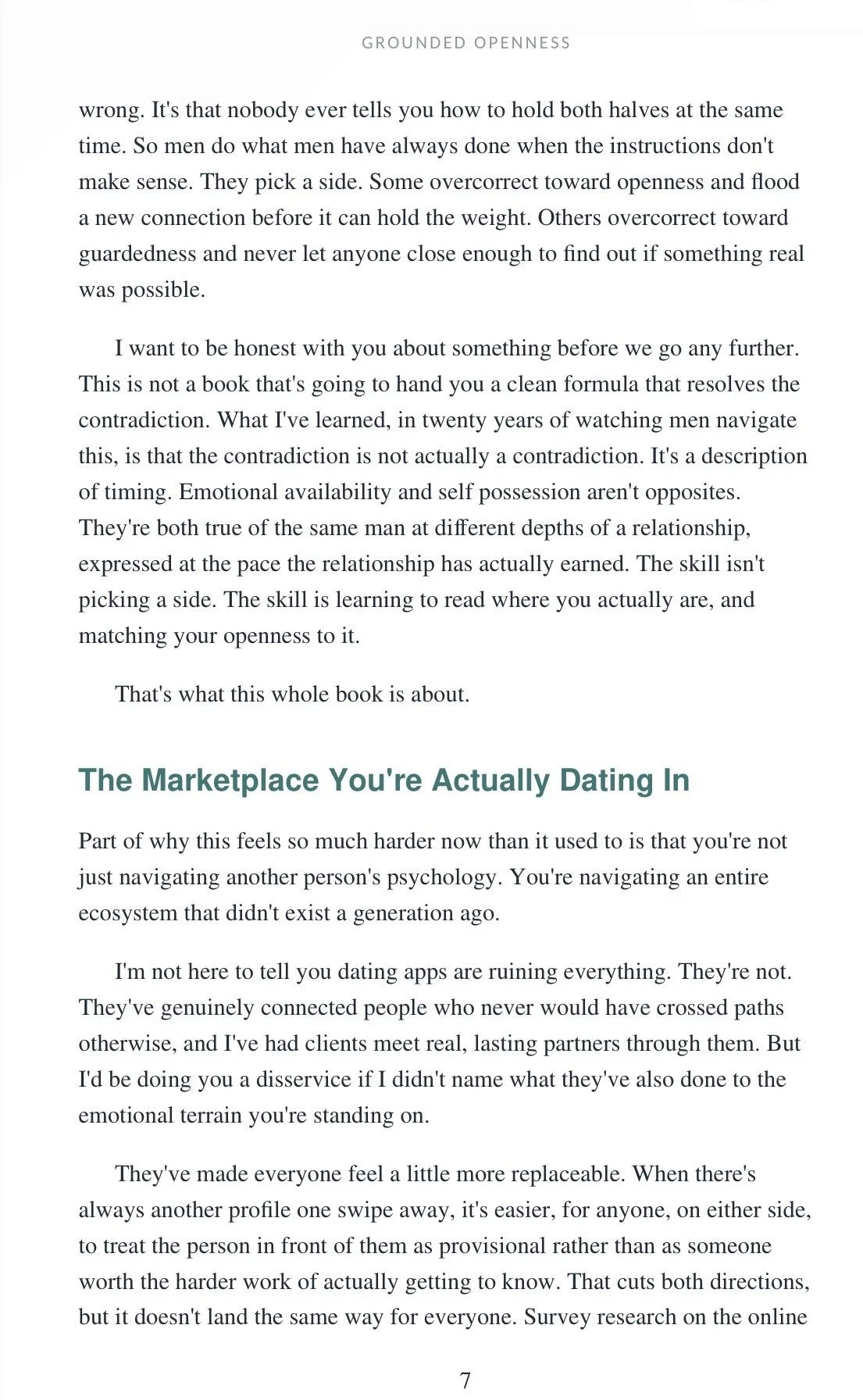
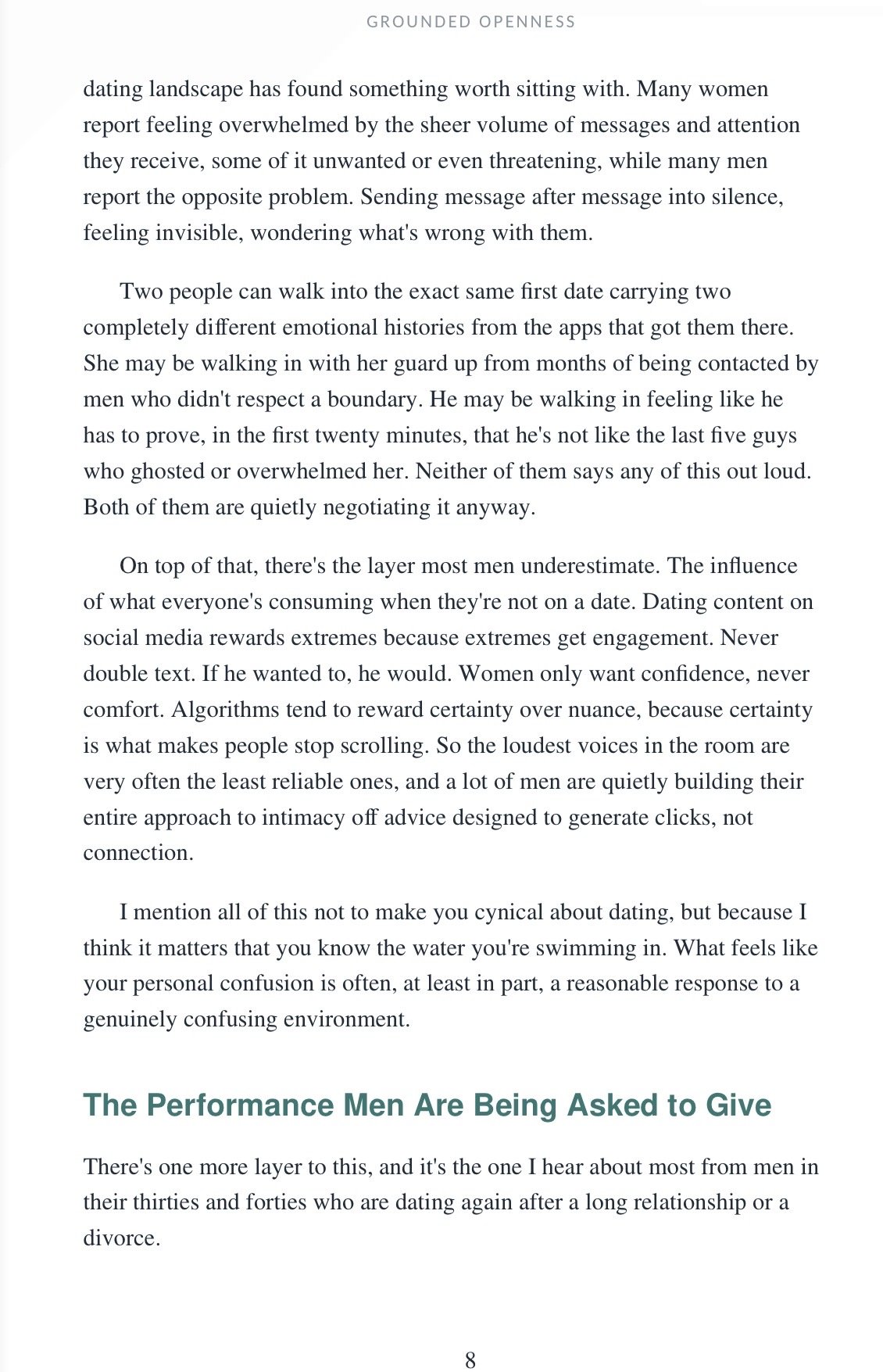
Below is the Introduction of the book